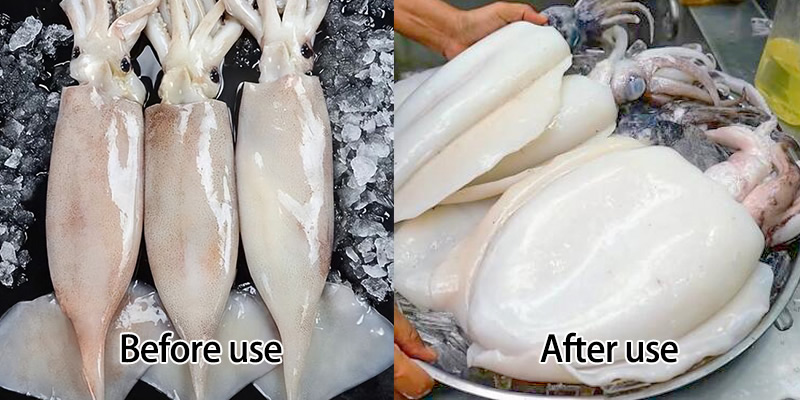
Squid skinning to improve the eating experience and product quality
Industry Needs: Unskinned squid, with its reddish-brown outer skin, turns dull and grayish when heated, resulting in a poor appearance. In braising, grilling, and frozen dishes, the broth easily becomes reddish and cloudy. The outer skin also has a slight fishy or astringent taste, affecting the eating experience. After prolonged freezing, the skin is prone to wrinkling and partial peeling, leading to an uneven appearance in the finished product. Traditional squid skinning is mainly done manually, which is time-consuming and inefficient. While squid skinning machines can be used, incomplete skinning and loss of nutrients can occur.
Solution Details
Squid skinning enzymes enzymatically break down collagen and elastin in the squid's connective tissue and muscle fibers. Appropriate enzymatic hydrolysis disrupts the connecting chains of the connective tissue, allowing the squid skin and meat to separate quickly. Combined with manual skinning or a squid skinning machine, complete skinning is achieved.