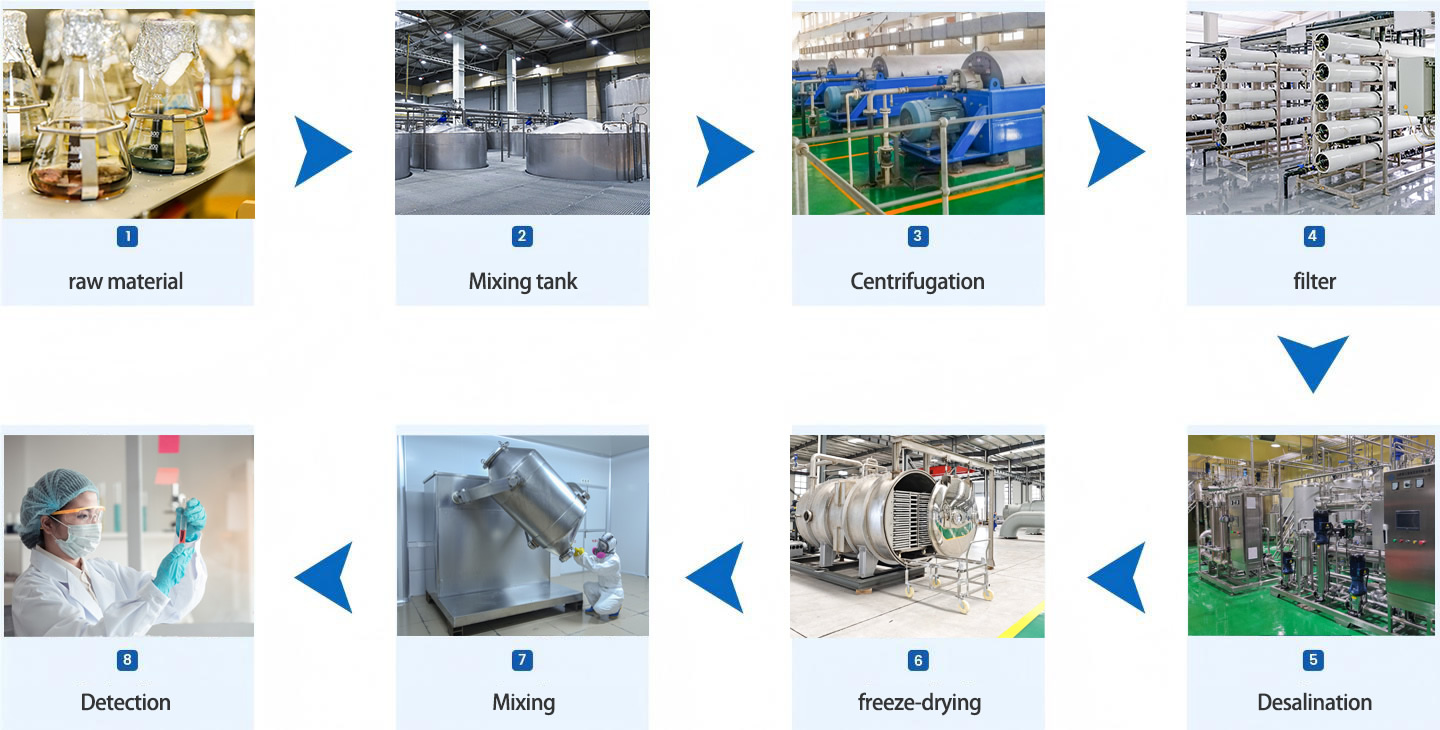
Rhamnosidase is a glycoside hydrolase that specifically hydrolyzes α-L-rhamnoside bonds. Its core function is to cleave L-rhamnose residues from the ends of natural glycoside compounds, releasing rhamnose and simultaneously improving flavor, solubility, and bioavailability. It appears as a light yellow to light brown powder and is easily soluble in water. In industry, it is mainly derived from fermentation and extraction of Aspergillus niger. It is a key biocatalyst in the food and pharmaceutical fields.


Rhamnosidase is a glycoside hydrolase that specifically hydrolyzes α-L-rhamnoside bonds. Its core function is to cleave L-rhamnose residues from the ends of natural glycoside compounds, releasing rhamnose and simultaneously improving flavor, solubility, and bioavailability. It appears as a light yellow to light brown powder and is easily soluble in water. In industry, it is mainly derived from fermentation and extraction of Aspergillus niger. It is a key biocatalyst in the food and pharmaceutical fields.
| Origin | Nanning, Guangxi, China |
| Physical properties | Light yellow to light brown powder |
| Enzyme activity | 100000U/g-200000U/g |
| Odor | distinctive smell |
| Solubility | soluble in water |
| Fineness | 40 mesh, 60 mesh, 80 mesh (Customizable on demand) |
| Optimal pH value | 4.0–5.5 |
| Optimal temperature | 45–60℃ |
| Product execution standards | GB1886.174-2016 |
| Addition amount | 0.01%–0.05% |
| Enzymatic hydrolysis time | 1-2 hours |
| Certification | HALAL certificate |
| ISO Quality System Certification | |
| FSSC22000 Food Safety System Certification | |
| Product specifications | Inner packaging: 1kg/bag, 5kg/bag, 20kg/bag. |
| Outer packaging: cardboard box, cardboard drum. |
Applications
| Citrus debittering | Pomelo debittering | Wine aroma enhancement | plant extraction |
Notices
1. Enzyme preparations are bioactive substances that are susceptible to the inhibitory and destructive effects of heavy metal ions (Fe3+, Cu2+, Hg+, Pb+, etc.) and oxidants. Contact with them should be avoided during use and storage;
2. For people who are easily sensitive, it may cause hypersensitivity reactions; Close contact or slight inhalation may irritate the skin, eyes, and mucosal tissues; During the use of enzyme products, it is recommended to wear protective equipment such as masks and eye masks.
3. Moisture proof, light proof, sealed and stored at low temperature (0-10 ° C) for 18 months. Enzymes experience a certain loss of enzyme activity during storage, with 5-10% loss of enzyme activity at 10 ° C for 6 months and 10-15% loss of enzyme activity at room temperature for 6 months.
4. Extending the storage period or being affected by harsh storage conditions such as high temperature and humidity can lead to an increase in usage.